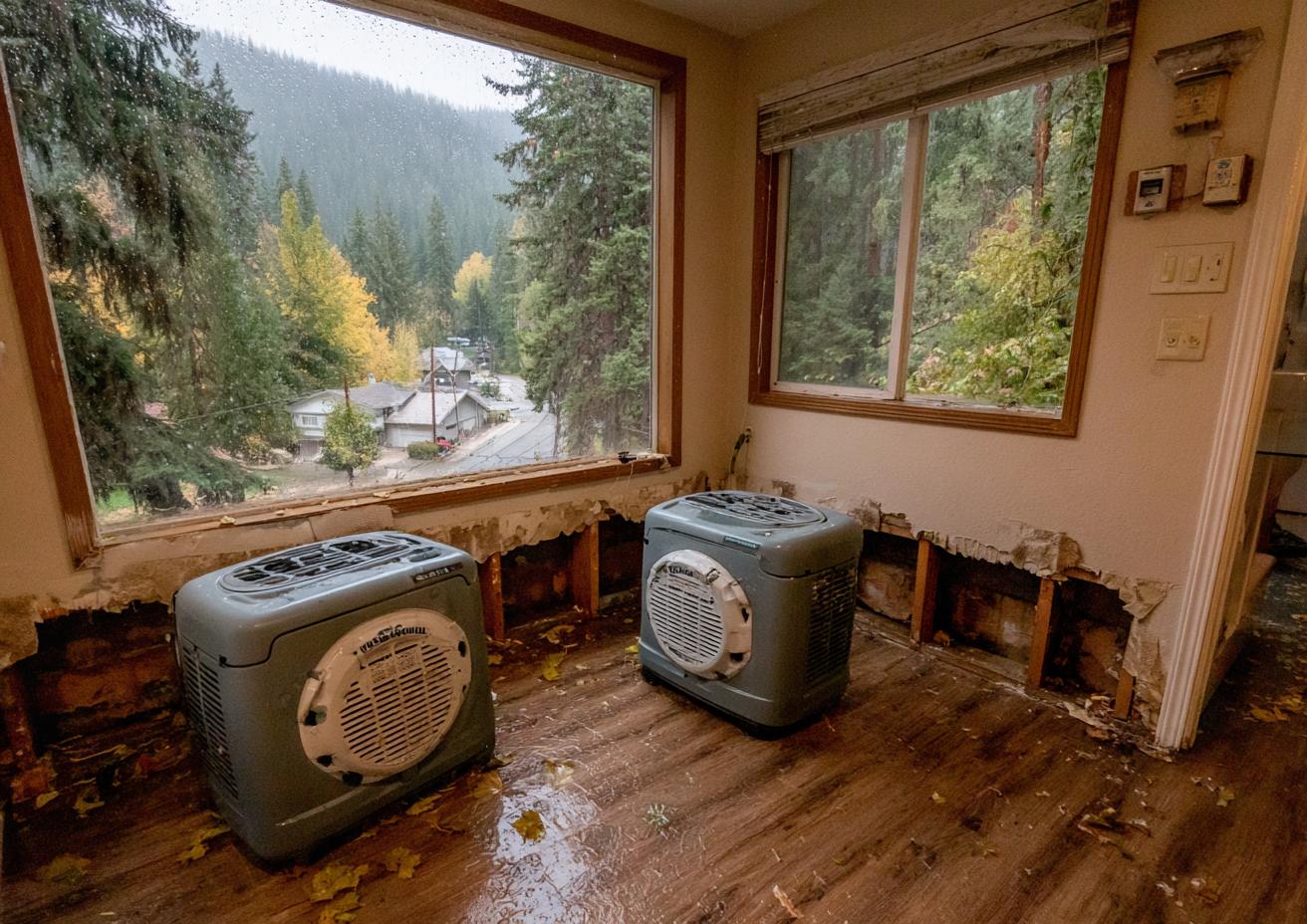
How Water Gets Into Walls and Floors
Water that lands on a floor doesn't stay on top of it. It runs under the flooring, soaks into the subfloor, and climbs the bottom of the drywall by wicking, often a foot or more above the waterline. The baseboard hides most of it. That's why a floor can look dry by evening while the wall cavity and the subfloor stay wet for days. Drywall water damage repair and floor drying start with readings: where the water went, how high it climbed, and which materials can be dried in place.
Carpet Water Damage
Carpet is the most common wet floor in Auburn homes, especially in split-level lower levels and upstairs bedrooms. After clean water, such as a supply line, a tub or a washer hose, carpet can often be extracted and dried in place. The pad under it holds water like a sponge and is usually replaced. Carpet that came apart from its backing, or that river or street water reached, comes out. The tack strip along the walls and the subfloor under the pad get checked either way.
Hardwood, Engineered, Laminate and Vinyl
| Floor | After a clean-water leak | What decides it |
|---|---|---|
| Solid hardwood | Often dried in place with drying mats | How long it was wet; cupping or crowning that doesn't settle |
| Engineered wood | Sometimes dried; the layers can separate | Whether the top layer lifts or bubbles |
| Laminate | Usually replaced | Swelling at the seams; water trapped underneath |
| Luxury vinyl plank | The planks often survive; the subfloor under them is the question | Readings under the planks |
| Tile | Usually stays | Readings in the subfloor or slab below; loose tiles |
Flooded Bathroom Floor
A tub that overflowed, a toilet supply line that let go, or a shower pan that failed puts water under the toilet, the vanity and the tile. From there it goes down. In a two-story house it shows up as a stain in the ceiling below; over a crawlspace it drips onto the vapor barrier. Drying a flooded bathroom floor means the subfloor, the toe kick and cabinet base, the wall cavity behind the tub, and whatever is under it.
Drywall: Dried in Place or Cut Out
- Dried in place: a short clean-water leak where the drywall reads wet only near the bottom, with air movers and sometimes small holes behind the baseboard for airflow.
- Cut out low on the wall: drywall that wicked high, stayed wet a long time, or has wet insulation behind it. The cut usually runs in a straight line a little above the wet area, so the patch is clean.
- Removed in full: anything flood water from outside reached.
After the cut, the wall cavity dries open, and new drywall goes in once the studs read dry.
Structural Drying in One Paragraph
Structural drying is the plan that dries the framing, subfloor and wall cavities, not just the surfaces. It sets air movers to sweep air across wet materials, dehumidifiers to pull that moisture out of the room, and readings on each visit compared with a dry part of the house. The job is done when the numbers match, not when the floor feels dry.
Can Hardwood Floors Dry Out After a Leak?
Often, if the water was clean and drying started quickly. Drying mats pull water out of the boards from the top, and air under the floor helps from below. Some cupping is normal while it dries and may settle afterward. Boards that stay cupped, crack or lift may need replacing or refinishing. The readings, not the look, decide.
When the Leak Is Inside the Wall
A supply line or drain inside a wall can leak for weeks before you see it. Clues are bubbling paint, a baseboard that's soft or stained, a carpet edge that's damp with no spill, or a musty smell in one corner. Appliance lines are a common source; see washer, dishwasher and fridge line leaks. Water around windows is another, in wind-driven rain: wind-driven rain behind siding and windows.
What It Costs
The company that takes the job prices it after readings. Flooring type, how much drywall comes out and the drying days move the number most. See what water damage restoration costs depend on.
Baseboards, Trim and Doors
Baseboards are often the first thing to come off on a wet-floor job, and not because they're ruined. Pulling them shows how high the water climbed behind them and lets air reach the bottom of the drywall. MDF baseboards and door casings that soaked usually swell and get replaced. Solid wood trim can often be dried, cleaned and put back. Interior doors that sat in water can swell at the bottom edge; hollow-core doors often don't recover. Ask the company to label trim it removes, so it goes back in the same place.
Wall and Floor Drying Around Auburn
Auburn
- Downtown AuburnAuburn
- North AuburnAuburn
- Lea HillAuburn
- Lakeland HillsAuburn
- West HillAuburn
- Terminal ParkAuburn
- KerseyAuburn
Green
White
West
Main page: water damage restoration in Auburn.