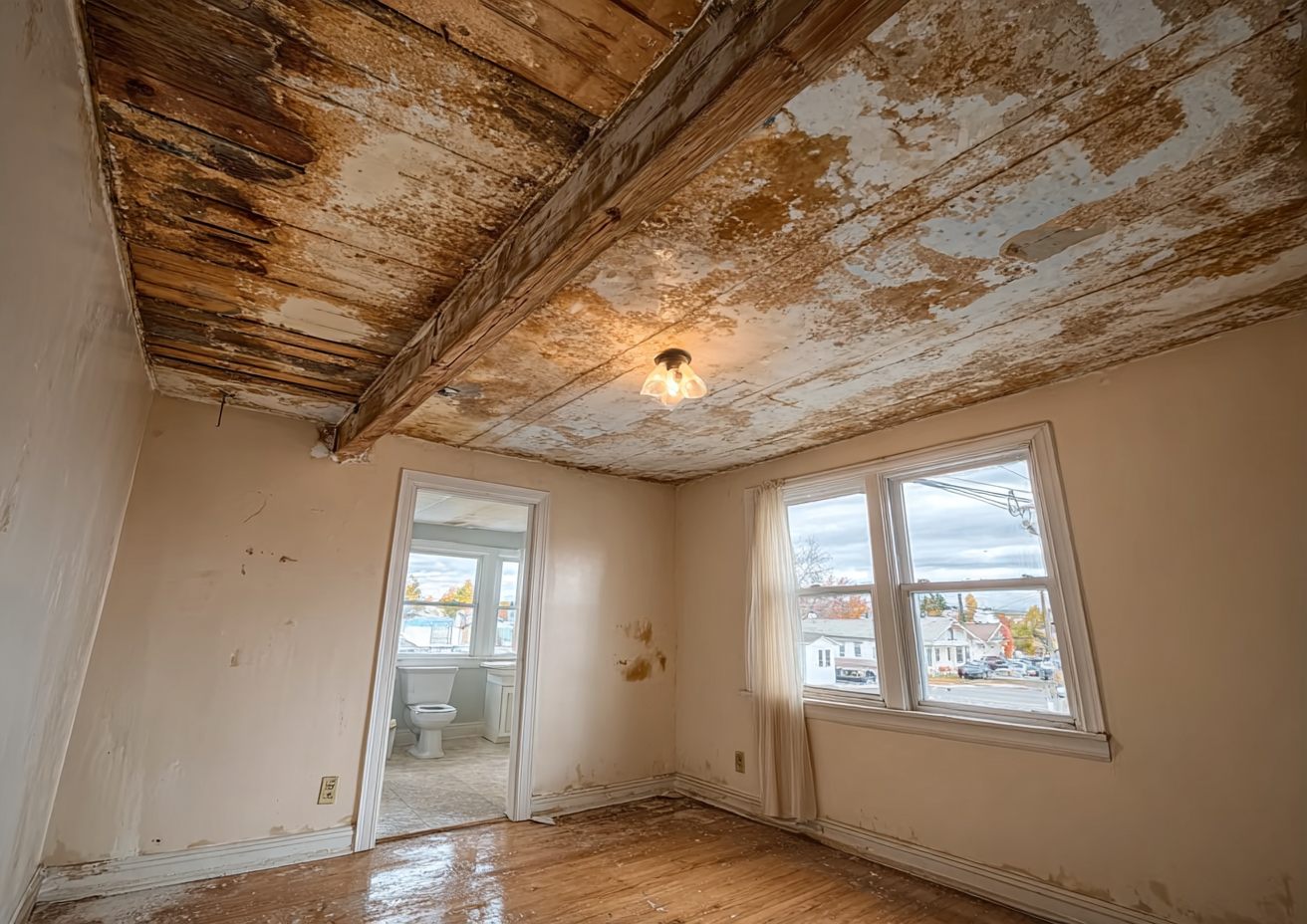
Where Ceiling Water Comes From
Water through the ceiling in an Auburn home usually comes from one of three places. The first is an upstairs bathroom or laundry room. The second is a supply line inside a wall or floor. The third, during a long rain, is the roof. The first two can leak on a dry day. The roof leaks when it's raining, or shortly after. In each case, the ceiling is only where the water finally escapes. The floor framing, the insulation and sometimes a wall above have been wet longer. Ceiling water damage repair starts with stopping the source, then drying or opening the wet section, and only then patching and painting.
Upstairs Bathroom Leaking to the Ceiling Below
This is the most common ceiling call in two-story homes on Lea Hill, Lakeland Hills and in Federal Way. The cause is usually something you can't see from the bathroom: a failed toilet seal, a tub or shower drain fitting, a supply line behind the vanity, or caulk and grout that opened up around a shower. The water runs along the floor joists before it drops, so the stain below can sit off to one side of the fixture. Both levels need work: the subfloor under the bathroom, and the ceiling, insulation and framing in the room below.
What the Ceiling Is Telling You
| Sign | What it usually means |
|---|---|
| A brown circle that grows slowly | A slow leak above; the drywall has been wet for a while |
| Bubbling or peeling paint | Water trapped between the paint and the drywall |
| A drip at a light fixture or smoke detector | Water has found the easiest way down, through a hole in the drywall |
| A bow or sag | The drywall is holding water and could come down |
| A stain only after rain | The roof or a vent opening, not plumbing |
A Sagging Ceiling: Keep Clear
A ceiling that bows is full of water, and saturated drywall can drop without warning. Keep people and pets out of the room. Move what you can from under it. Turn off power to fixtures in the wet area at the panel, if you can do it safely. Don't puncture it yourself; a restoration company relieves the water in a controlled way and protects the floor underneath.
How a Wet Ceiling Gets Opened, Dried and Patched
- Source stopped: the supply line, the drain, or the roof opening.
- Readings on the ceiling, and from above, on the subfloor or in the attic.
- Wet insulation pulled from the attic or joist bay above the stain.
- Ceiling opened where it's saturated or sagging, often one section, so air reaches the framing.
- Dried with air movers and dehumidifiers until the framing and remaining drywall read dry.
- Patched: new drywall, tape, texture to match, primer and paint.
Is a Ceiling Water Stain Still Wet Inside?
Usually. The painted face dries first, while the gypsum core, the insulation over it and sometimes the joists stay damp for days. A moisture meter tells in seconds. Painting over a stain that's still wet inside seals the moisture in, and the stain comes back through the new paint.
When the Stain Shows Up in Heavy Rain
A stain that appears only in a long rain points to the roof, a vent boot, a skylight or flashing. Puget Sound rain can run for days, so a small opening can put a lot of water into attic insulation before anything shows. The interior side of that is restoration work: pulling wet insulation, drying the attic and the ceiling, and repairing the drywall. Wind-driven rain also gets into walls around windows; see wind-driven rain behind siding and windows.
Matching the Ceiling Texture
Most Auburn ceilings are textured: orange peel or knockdown in newer homes, and popcorn in some older ones. A replaced section needs texture to match before paint. On older ceilings, an exact match is hard, so some repairs carry the texture to a natural break, like a corner. Older popcorn ceilings may need testing before they're disturbed; ask the company how it handles that.
What It Costs
The company that does the work prices it after it sees the ceiling, the source and how far the water went. See what water damage restoration costs depend on.
Water at a Light Fixture or Smoke Detector
Water finds holes. When it's dripping from a ceiling light, a fan or a smoke detector, it has found the opening cut for that fixture, and the wiring is wet. Turn that circuit off at the panel if you can reach the panel from a dry floor, and don't use the switch. Leave the fixture in place. The restoration company will open the ceiling around it once the power is confirmed off, and the fixture and wiring need to be confirmed safe before they're used again. Wet wiring is the reason a dripping fixture is never a wait-and-see problem.
Ceiling Repairs Around Auburn
Auburn
- Downtown AuburnAuburn
- North AuburnAuburn
- Lea HillAuburn
- Lakeland HillsAuburn
- West HillAuburn
- Terminal ParkAuburn
- KerseyAuburn
Green
White
West
Main page: water damage restoration in Auburn.