What a Flooded Basement Usually Means Here
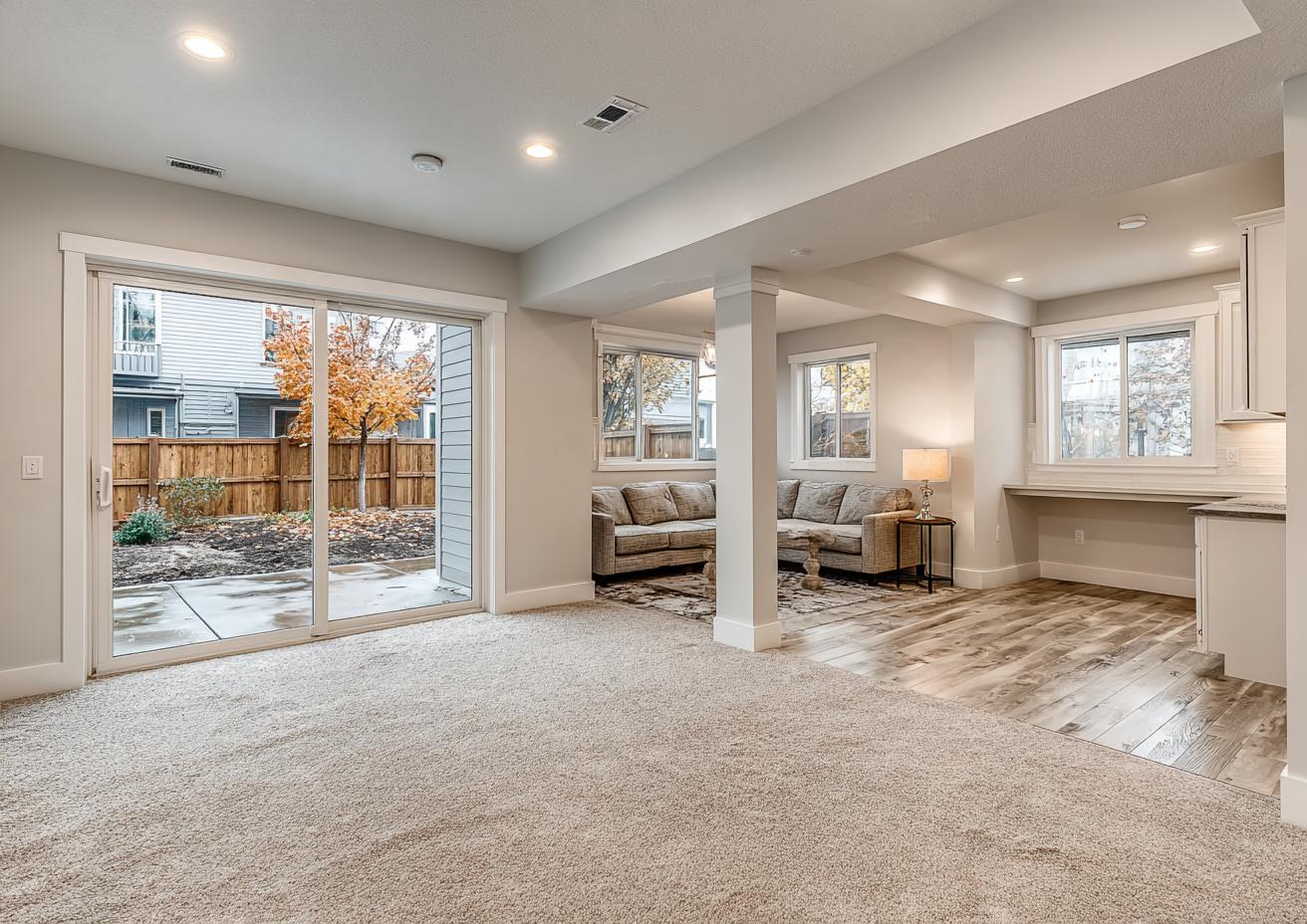
In Auburn, a flooded basement usually means a daylight basement: the lower level of a split-level or hillside house on West Hill, Lea Hill or the plateaus, where one side of the room opens to the yard at grade. Down on the valley floor, more older homes sit over a crawlspace instead, and the water collects under the house where nobody sees it. Both take on water from the same handful of sources. Both need the water pumped out and the space dried with readings. What's different is what gets wet and how the drying is set up.
Leak in the Basement: Where It Comes From
- Hillside groundwater: after long rain, water moving downhill through the soil presses on the uphill wall and finds the joint at the floor.
- Window wells and door thresholds: on the downhill side, a well that fills or a slider at grade can let surface water straight in.
- A supply line or water heater: many basements hold the water heater, the washer and the main shutoff.
- A lower-level bathroom: a toilet, shower or supply line, often under carpet.
- River or surface water: on low ground near the Green and White rivers.
Standing Water in the Crawlspace
Water under a house is easy to miss. Clues are a damp or musty smell inside, floors that feel cold or soft, cupping in hardwood, or condensation on windows. Look through the access hatch with a flashlight; don't crawl in if there's standing water and wiring. A wet crawlspace soaks the vapor barrier on the ground and the insulation between the floor joists. Left alone, it keeps the subfloor damp from below.
Drying a Basement vs. Drying a Crawlspace
| Daylight basement | Crawlspace | |
|---|---|---|
| Water removal | Pumps, then extraction from carpet and concrete | A pump at the low point, through the access hatch |
| What usually comes out | Carpet pad, often laminate, the bottom of drywall, wet insulation in finished walls | The wet vapor barrier, sagging or soaked joist insulation |
| How it dries | Air movers and dehumidifiers in the room, readings on walls and floor | Air moved through the crawlspace, dehumidifiers, readings on joists and subfloor |
| What goes back | Drywall, trim, flooring | A new vapor barrier and insulation, once the wood reads dry |
Is Crawlspace Water an Emergency?
Standing water under a house is worth calling about now, not next season. It isn't usually dangerous to the people inside, but it keeps the floor framing wet, ruins insulation and the vapor barrier, and keeps getting worse in a wet Auburn winter. Water that's still rising, or that's near the furnace, ductwork or wiring under the house, makes it more urgent.
Finished Basements on the Hills
Many plateau split-levels have finished lower levels: carpet over concrete, drywall over insulated framing, a bedroom or family room. Water on that floor wicks into the walls fast, and carpet pad holds it against the slab. Expect the pad to come out, the bottom of some drywall to be cut, and readings on the concrete before new flooring goes down. More: daylight basements on hillside lots.
Valley-Floor Crawlspaces Near the Rivers
Downtown Auburn, North Auburn, Algona and Pacific sit on the valley floor near the Green and White rivers. Groundwater there rises in a long wet spell, and river water can reach under houses when the rivers run high. More: crawlspace water on the valley floor.
Mechanicals Under the House
Water heaters, furnaces and ducts often sit in basements and crawlspaces. If water reached a gas appliance or electrical equipment, leave it off and have the utility confirm it's safe before it's restarted. If you smell gas, leave the house and call the utility from outside.
While You Wait
- keep out of standing water near outlets, cords or the panel
- move what you can off the basement floor
- photograph everything, including the water depth against a wall
- don't run a household vacuum or fans on standing water
Lower-Level Bathrooms and Laundry Rooms
Many split-levels put a bathroom or laundry room on the lower floor, often over the slab and sometimes below the level of the main sewer line. A toilet supply line, a washer hose or a shower drain there sends water straight into carpet and the bottom of the drywall in the next room. Because the floor is concrete, the water spreads sideways instead of draining away. Treat it like any other basement water: shut off the source, keep clear of outlets, and have the floor, the walls and the room next door read for moisture before anything is put back.
Basements and Crawlspaces Around Auburn
Auburn
- Downtown AuburnAuburn
- North AuburnAuburn
- Lea HillAuburn
- Lakeland HillsAuburn
- West HillAuburn
- Terminal ParkAuburn
- KerseyAuburn
Green
White
West
Main page: water damage restoration in Auburn.