Some of the most common water damage calls in Auburn-area homes have nothing to do with rivers or rain. They come from the kitchen and the laundry room: a washer hose that bursts, a dishwasher connection that drips for months, an ice-maker line behind the fridge that splits. These leaks are easy to miss because the appliance sits on top of the evidence. By the time water shows, it's often under the flooring, inside the cabinets, or in the ceiling below.
The Usual Suspects
| Appliance | What fails | How it shows up |
|---|---|---|
| Washing machine | Rubber supply hoses; the drain hose; the valve box in the wall | A sudden flood across the laundry floor, or a stain in the ceiling below an upstairs laundry |
| Dishwasher | The supply connection; the drain hose; the door seal | Swelling at the edge of the floor in front of it; soft cabinet bases next to it |
| Refrigerator | The plastic or copper ice-maker line | Water at the base of the fridge; floor damage behind and under it |
| Water heater | The tank itself; connections; the relief valve line | Water around the base; rust; a stain under a closet or garage wall |
| Kitchen sink | Supply lines and the drain under the sink | Warped cabinet floor; damp toe kick |
Where the Water Goes
Appliance leaks spread in a predictable way:
- Across the floor under the appliance, where nobody looks.
- Under the flooring, especially laminate, vinyl plank and hardwood, where it can't evaporate.
- Into cabinets, through the toe kick and the bottom panels, which are often particleboard.
- Into walls, wicking up the drywall behind the appliance.
- Down a level, through the subfloor into a ceiling below or a crawlspace.
A slow drip can do as much damage as a burst hose because it goes on for so long.
Signs of a Slow Leak
- flooring that's raised, soft or separated near the appliance
- a cabinet base that's swollen or stained
- a musty smell from under the sink or behind the fridge
- a stain in the ceiling below an upstairs laundry room
- a water bill that's crept up with no change in use
What to Do First
- shut off the water to the appliance, or at the main if you can't find the valve
- unplug the appliance if you can reach the plug without standing in water
- pull it out only if it's safe and the floor isn't soft
- photograph the floor, the connection and anything wet nearby
Leave the repair of the appliance or its connection for after the drying is planned. Water damage first, so nothing gets closed up wet.
What Drying Involves
The restoration company reads the floor around the appliance, the cabinets beside it, the wall behind it and the ceiling or crawlspace below. Laminate usually comes up. Cabinet toe kicks may come off so air can get underneath. The subfloor and wall are dried with air movers and dehumidifiers until the readings match a dry part of the house.
Questions
Is a burst washer hose covered by insurance?
Sudden water from a burst hose is often covered under a homeowners policy. A slow leak that went on for months often isn't. Your policy decides.
How often should washer hoses be replaced?
Many manufacturers suggest checking them regularly and replacing them every several years. Braided steel hoses last longer than plain rubber.
Why is my ceiling stained under the laundry room?
An upstairs washer hose, drain or valve box is the likeliest cause. See ceiling water damage repair.
Can the cabinets be saved?
Solid wood often can, if dried quickly. Particleboard that swelled usually can't.
Upstairs Laundry Rooms
Many newer two-story homes put the laundry room upstairs, near the bedrooms. It's convenient until a hose lets go. Then the washer's full flow runs across the laundry floor, under the door and into the subfloor, and it comes through the ceiling below, often into a kitchen or living room. A drain pan under the washer, with a drain line, catches small leaks but not a burst hose. A water sensor on the floor gives warning. If the laundry room is upstairs, know where its shutoff valves are, and turn them off before you leave on a trip.
Where This Is Common
Appliance leaks are common everywhere, especially in two-story homes and condos: Lakeland Hills, Kersey, Federal Way and older homes in Terminal Park. For wet floors and drywall, see drywall, carpet and floor water damage.
Wind-Driven Rain: Water Behind Siding and Around Windows
How storm rain gets into walls without a roof leak.
Crawlspace Water on the Valley Floor
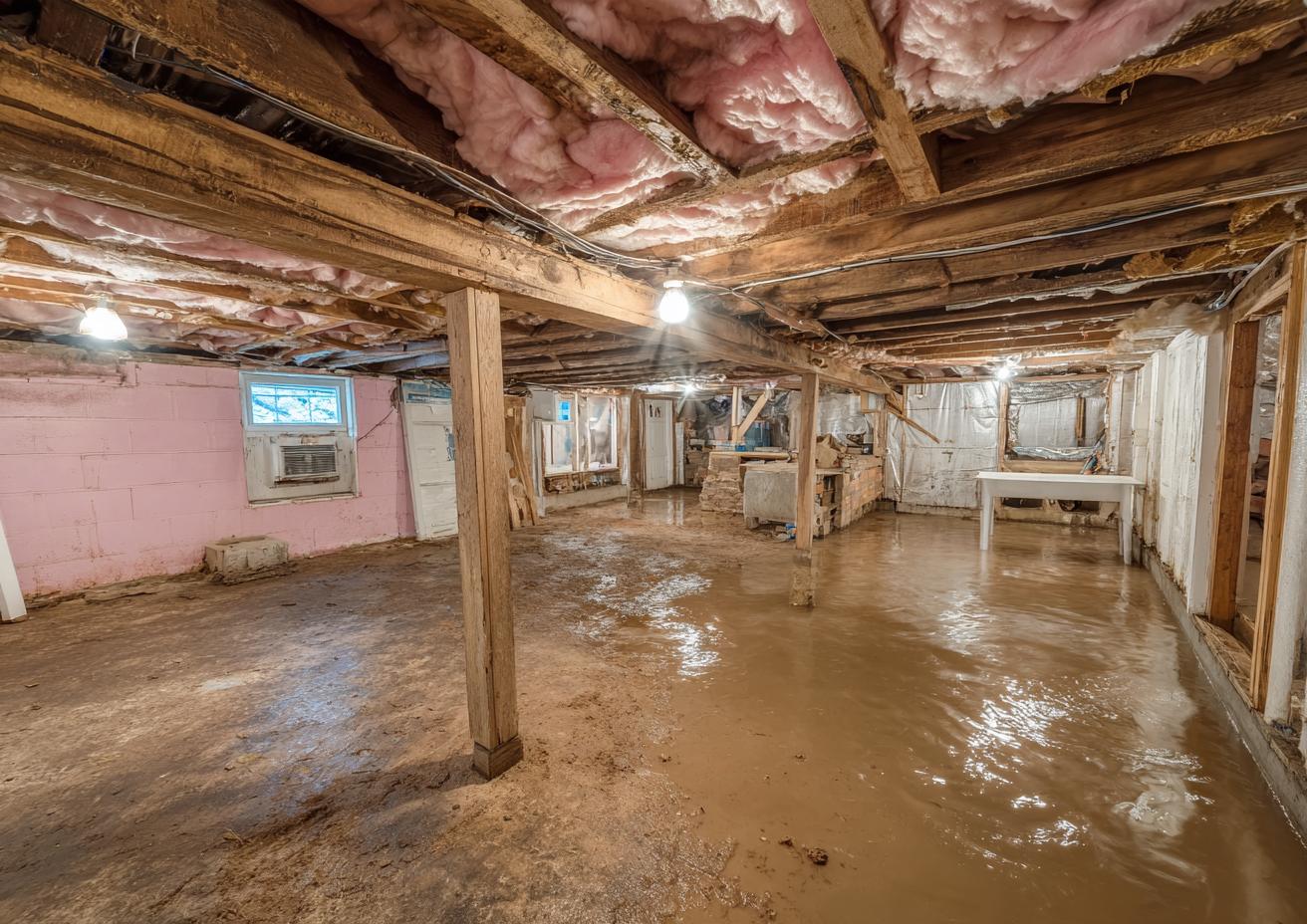
What's going on under older houses near the rivers.