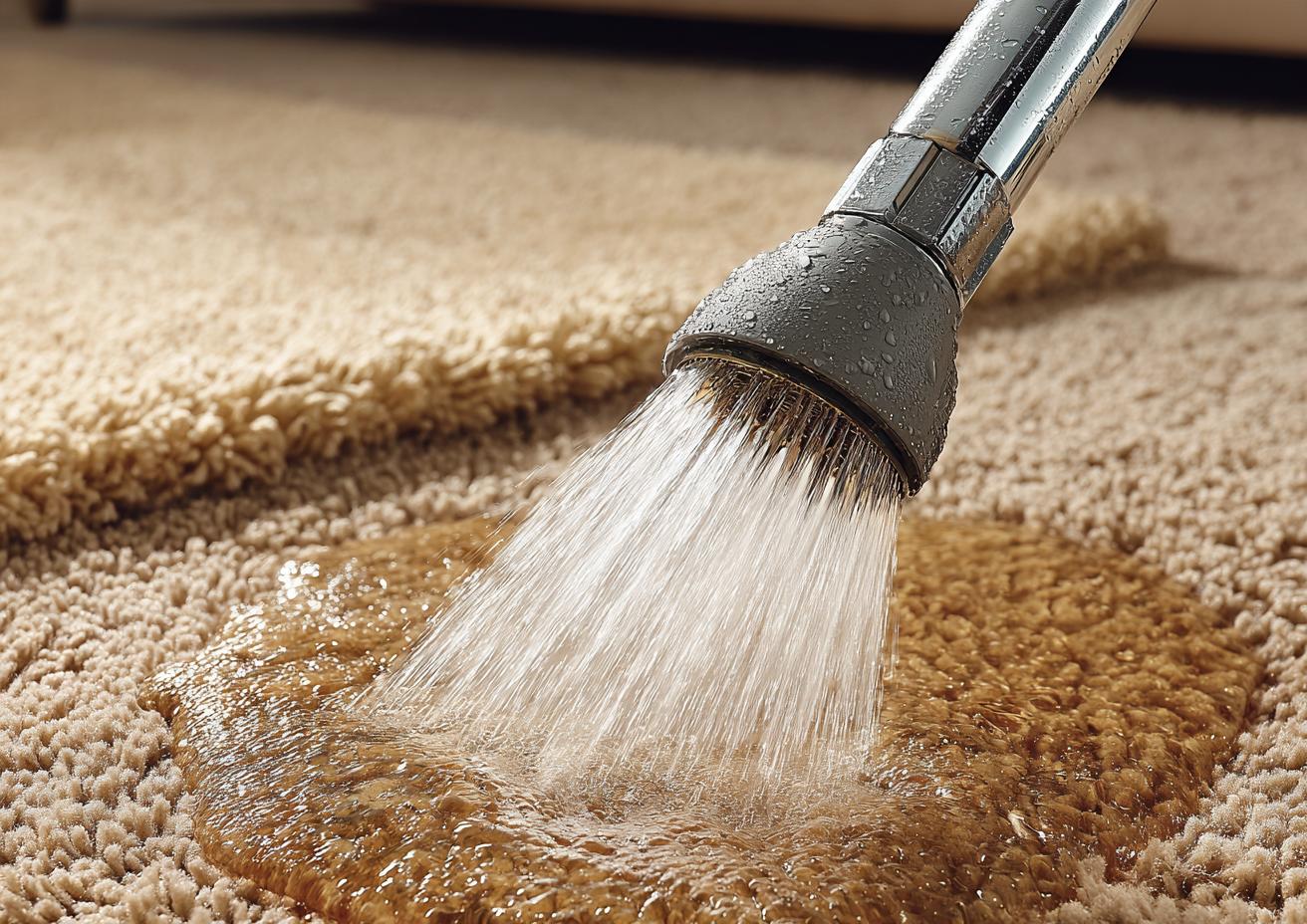
What Water Extraction Means
Water extraction is the step that gets standing and soaked-in water out of a house before drying starts. Fans can't dry a floor that's still holding water. A carpet and pad can hold many gallons, and a concrete basement floor or a crawlspace can hold standing water for a long time. Emergency water removal uses pumps for standing water and extractors for what's soaked into carpet, pad and wood. Then the drying equipment goes in. The more water that comes out at this stage, the shorter and more predictable the drying is.
What Gets Extracted, and How
| Surface | How the water comes out | What usually happens next |
|---|---|---|
| Carpet and pad | Extraction wands or a weighted extractor; the pad is often pulled | Carpet dried in place or replaced; new pad |
| Hardwood | Surface extraction, then drying mats that pull from the boards | Readings over several days; some boards may cup |
| Tile and vinyl | Squeegee and extraction; grout lines and edges checked | Drying of the subfloor or slab under it |
| Basement concrete | Pumps for depth, then extraction | Wall bottoms and baseboards checked for wicking |
| Crawlspace | Pump from the low point, then remove the wet vapor barrier | Drying under the house; new vapor barrier |
Why the First Stage Matters Most
Water keeps moving after it lands. It spreads under flooring, wicks up drywall and soaks into the bottom plate of the wall. Every hour it sits, more of the house gets wet, and more material ends up being removed instead of dried. There's no promise about when a crew will arrive; that's set by the company that takes the job. But the sooner extraction starts, the more of the house can usually be saved.
The Equipment, in Plain Words
- Truck-mounted extraction: a powerful vacuum system run from a vehicle outside, used for large wet areas.
- Portable extractors: carried in, used for stairs, upper floors, apartments and tight spaces.
- Submersible pumps: for standing water more than an inch or two deep, such as a basement or crawlspace.
- Air movers: low fans that blow across wet surfaces once the water is out.
- Dehumidifiers: pull the moisture the air movers lift off the floor and walls.
- Moisture meters and thermal cameras: show where the water went behind the surfaces.
Before the Company Arrives
- shut off the water at the main if a line is still running, and only if you can reach it safely
- keep away from wet outlets, cords and the electrical panel
- move small belongings and anything valuable off wet floors
- set wood furniture legs on foil or blocks
- photograph every wet room before anything moves
Don't use a household vacuum on standing water. It isn't built for it, and it's an electrical risk.
Can Wet Carpet Be Saved After Water Extraction?
Often, if the water was clean, such as a supply line or a tub overflow, and the carpet was extracted and dried quickly. The pad under it usually gets replaced either way, because it holds water like a sponge. If the water came from outside, from the river, the street or a yard, the carpet and pad come out. Carpet that has delaminated, meaning the backing has separated, doesn't recover.
Where Extracted Water Hides
Water extraction isn't finished when the floor looks dry. It often goes:
- under the edge of the carpet into the tack strip
- under baseboards and into the bottom plate of the wall
- under laminate, where it can't evaporate
- down through the subfloor into a basement ceiling or crawlspace
- into the toe kicks under cabinets and vanities
Readings at these spots decide whether more removal is needed.
Water Removal on an Upper Floor
When water lands on an upper floor, it doesn't stay there. It runs through the subfloor into the ceiling below, sometimes into light fixtures. Extraction upstairs and drying the ceiling downstairs are one job. See ceiling water damage repair and drywall, carpet and floor water damage.
What It Costs
Water removal is priced by the company that does it, usually by the area and depth of the water, the materials, and the equipment days. See what water damage restoration costs depend on.
Stairs, Landings and Split-Level Steps
Water on an upper floor runs to the stairs. In split-level homes on the plateaus, it can run down a short flight into the lower level and soak the carpet on every step along the way. Stair carpet and pad hold water in the tread corners and against the risers, and the stringers underneath can stay wet. Extraction on stairs is done with portable tools, one step at a time, and the pad usually comes out. Readings on the stair framing and the wall beside the stairs tell whether drying is done.
Water Removal Around Auburn
Auburn
- Downtown AuburnAuburn
- North AuburnAuburn
- Lea HillAuburn
- Lakeland HillsAuburn
- West HillAuburn
- Terminal ParkAuburn
- KerseyAuburn
Green
White
West
Main page: water damage restoration in Auburn.