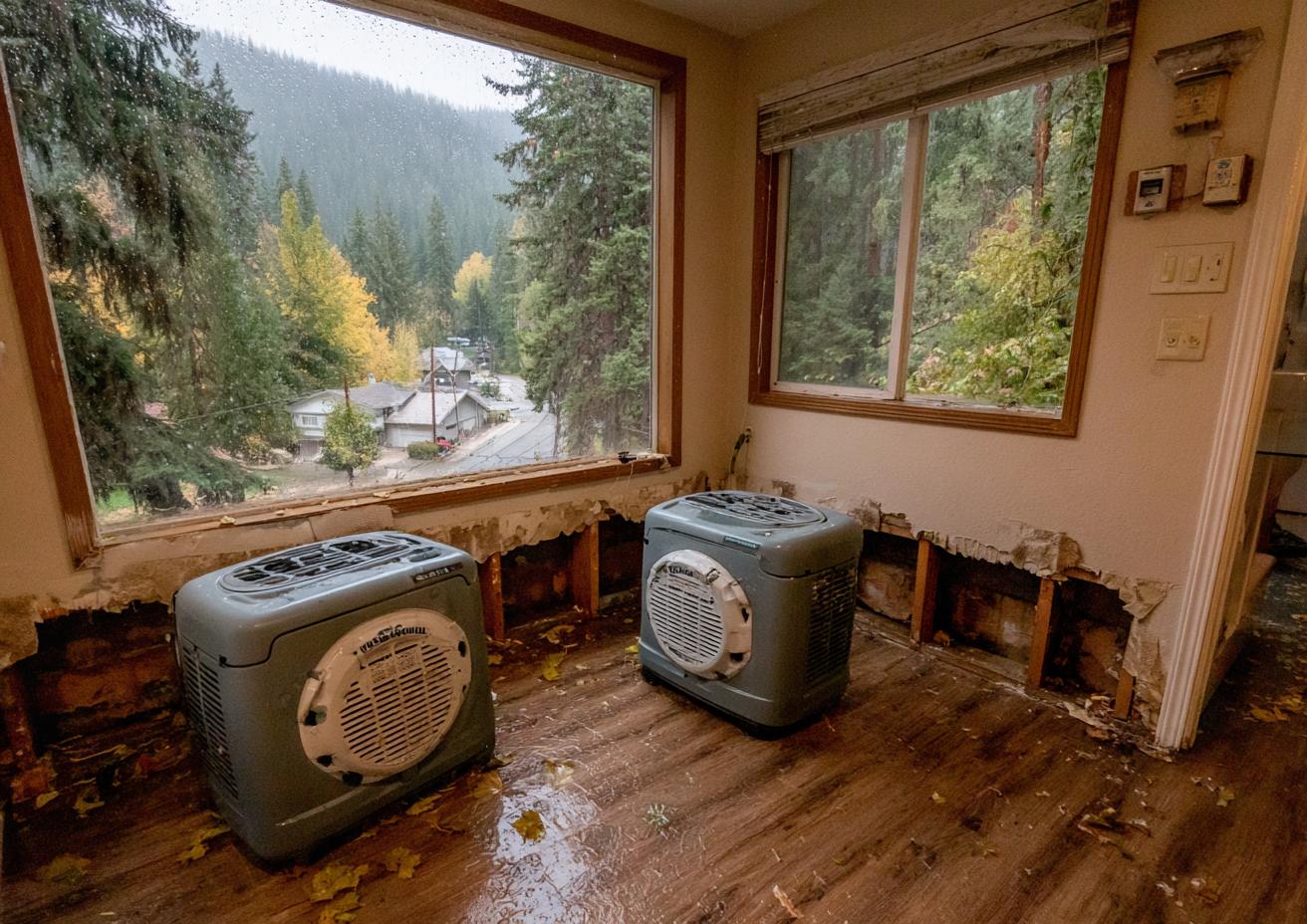
There's no honest single number for water damage restoration. Two leaks in two houses on the same street can produce very different bills, and the company that does the work prices it after seeing the damage. What you can understand ahead of time is what moves the number. This guide walks through the factors, in roughly the order they show up on a job.
The Two Halves of the Bill
Most water damage jobs split into two stages, often on separate paperwork:
- Mitigation: stopping the source, extraction, removing ruined materials, setting and monitoring drying equipment. This is where water mitigation cost and water remediation cost show up.
- Restoration and repair: drywall, texture, paint, trim, flooring, cabinets, putting the room back.
Mitigation is usually the part that happens first and fastest. Repair can follow days or weeks later, sometimes by the same company, sometimes not.
The Factors
| Factor | Why it matters |
|---|---|
| Where the water came from | Clean water from a supply line can often be dried in place. River or street water means removal and cleaning of everything porous it touched |
| How long it sat | The longer water sits, the further it spreads and the more material has to come out instead of drying |
| How much area is wet | More square footage means more extraction, more equipment and more readings |
| How many levels | An upstairs leak that reached the ceiling below means drying two floors |
| What the floors are | Carpet and pad, hardwood, laminate and tile each extract, dry and replace differently |
| How high it wicked | Drywall cut at a few inches costs less to patch than drywall cut at four feet |
| What's in the walls | Wet insulation behind drywall has to come out |
| Access | A crawlspace with a small hatch, a finished basement or a third-floor condo all change the labor |
| Drying days | Equipment is often billed by the day; slabs, hardwood and crawlspaces can take longer |
| Rebuild scope | Matching texture, finishing hardwood, replacing cabinets or a full floor |
Ceiling and Drywall Repairs
The questions people search most often about cost are about ceilings and drywall: water damage ceiling repair cost, and the cost to repair drywall after a leak. The ceiling side depends on how big the wet section is, whether insulation above it is wet, whether the joists need drying, and how hard the texture is to match. On drywall, the height of the cut and the length of wall decide most of it. A small clean-water leak caught early is the cheapest version of either.
What Doesn't Belong in the Price
Be wary of pricing that's set before anyone has seen the house. A fair price comes after readings show how far the water went. Ask for a written scope that lists:
- the rooms and materials involved
- what's being removed, and why
- the drying plan and how readings will be recorded
- what's not included, such as contents or rebuild work
How Insurance Fits In
When a homeowners policy covers the loss, the insurer and the restoration company usually work from the same scope, and you pay the deductible. Coverage depends on the cause. Sudden water from a burst line or failed fixture is often covered. Long-term leaks, groundwater and river flooding often aren't, or fall under a separate flood policy. See flood insurance near Auburn's levees.
Keeping the Cost Down
- Stop the water. Shut off the main if a line is still running.
- Call early. Every day water sits, more material ends up removed instead of dried.
- Photograph first. Good records keep a claim moving.
- Ask about drying in place. Where readings allow, drying saves replacement.
- Keep the readings. They show the house was dried properly before the walls closed.
Questions
How much does water damage restoration cost in Auburn?
It depends on the factors above, and the company prices it after seeing the damage. A small clean-water leak caught early is at the low end. Flood water across a whole floor is at the high end.
Why is mitigation billed separately from repair?
They're different work, often on different days. Insurers usually want to see them separately too.
Does a bigger company cost more?
Not necessarily. Ask what's included, how drying is documented, and who does the rebuild.
Will my insurer pay the restoration company directly?
Often, when the loss is covered. Read anything you're asked to sign about your claim first.
Related Reading
The order of the work is in water damage restoration and mitigation. Appliance leaks, one of the most common sources, are in washer, dishwasher and fridge line leaks.
Flood Insurance Near Auburn's Levees
NFIP, levee areas and what a homeowners policy leaves out.
Washer, Dishwasher and Fridge Lines: Leaks That Spread Under the Floor
The appliance connections that fail, and where the water goes.