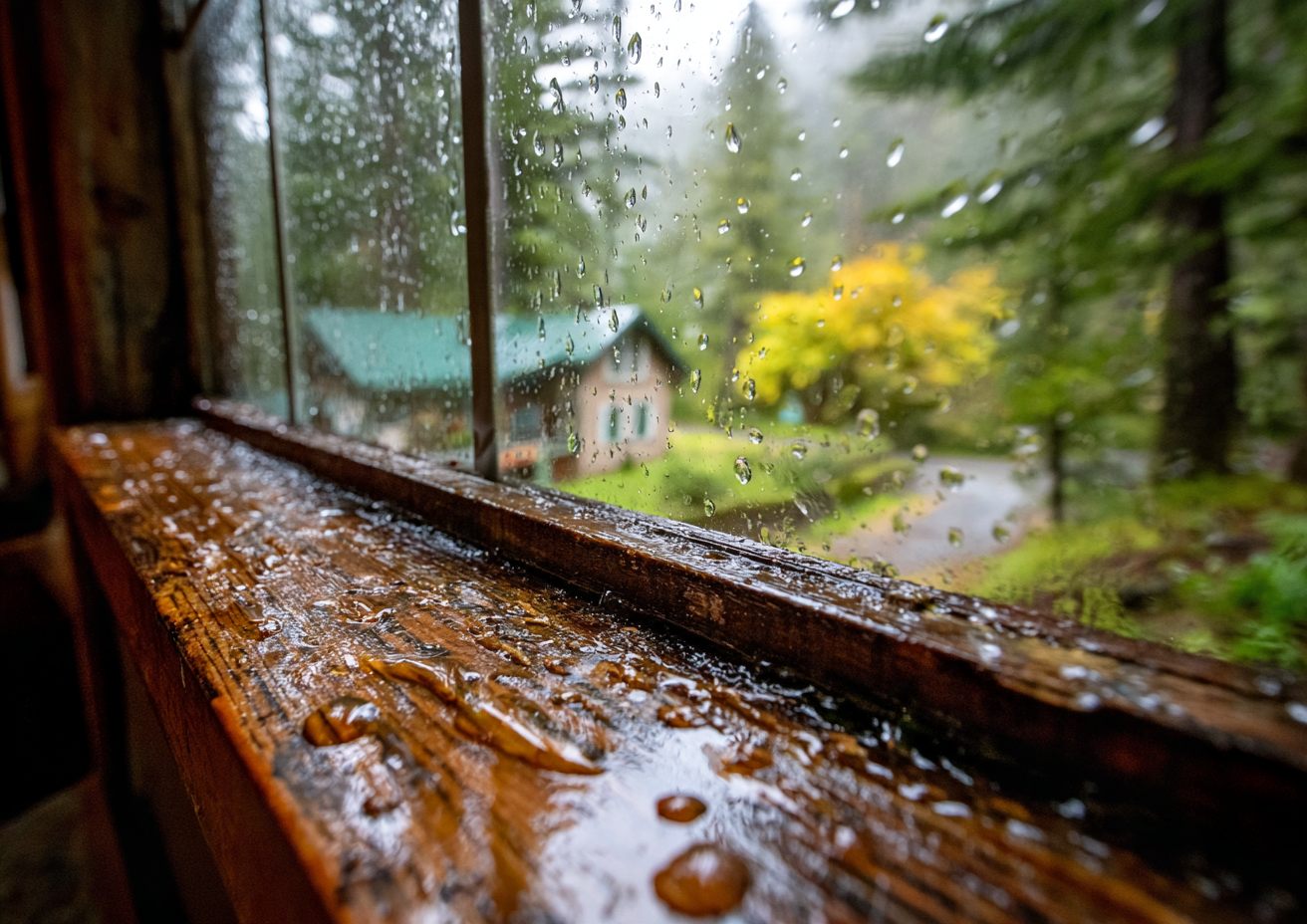
Not every leak comes from the roof or the plumbing. In a Puget Sound storm, wind drives rain sideways into the walls of a house, and some of it finds its way inside: behind siding, around window frames, under sills and through gaps around vents and outlets. Exposed homes on hillsides, around Lake Tapps and on the plateaus take the most of it. The water often shows up inside as a stain under a window, a swollen sill, or damp drywall that only appears in storms.
How the Water Gets In
| Path | What happens |
|---|---|
| Around window frames | Rain blown against the window runs to the corners and gets behind the trim where caulk or flashing has failed |
| Under the sill | Water collects on a flat or back-sloped sill and soaks into the wood and the wall below |
| Behind siding | Wind pushes water up and behind lapped siding, past the outer layer |
| Through penetrations | Gaps around vents, hose bibs, light fixtures and outlets on exterior walls |
| Where walls meet decks | Water pools at the joint between a deck and the house wall |
Signs Inside the House
- a stain or water mark on the wall below a window, often at a corner
- a window sill that's soft, swollen or darker than the rest
- paint that bubbles or peels on an exterior wall
- damp carpet along an outside wall after a storm, with no plumbing nearby
- a musty smell in one corner of a room
- stains that appear only in storms from one direction
That last clue is the strongest. A leak that shows up only when the wind blows from the south or west is coming through the wall, not the pipes.
What It Damages
Water that gets past siding or a window frame runs down inside the wall. It wets the sheathing, the framing and the insulation, and soaks the bottom of the drywall from behind. Because the outside face of the wall looks fine and the inside face dries quickly, this kind of damage can go on through a whole rainy season before anyone notices.
Water coming in around a window?
Wet ceiling, wet floor, wet crawlspace? (253) 338-5837.
Call (253) 338-5837What Drying a Wet Wall Involves
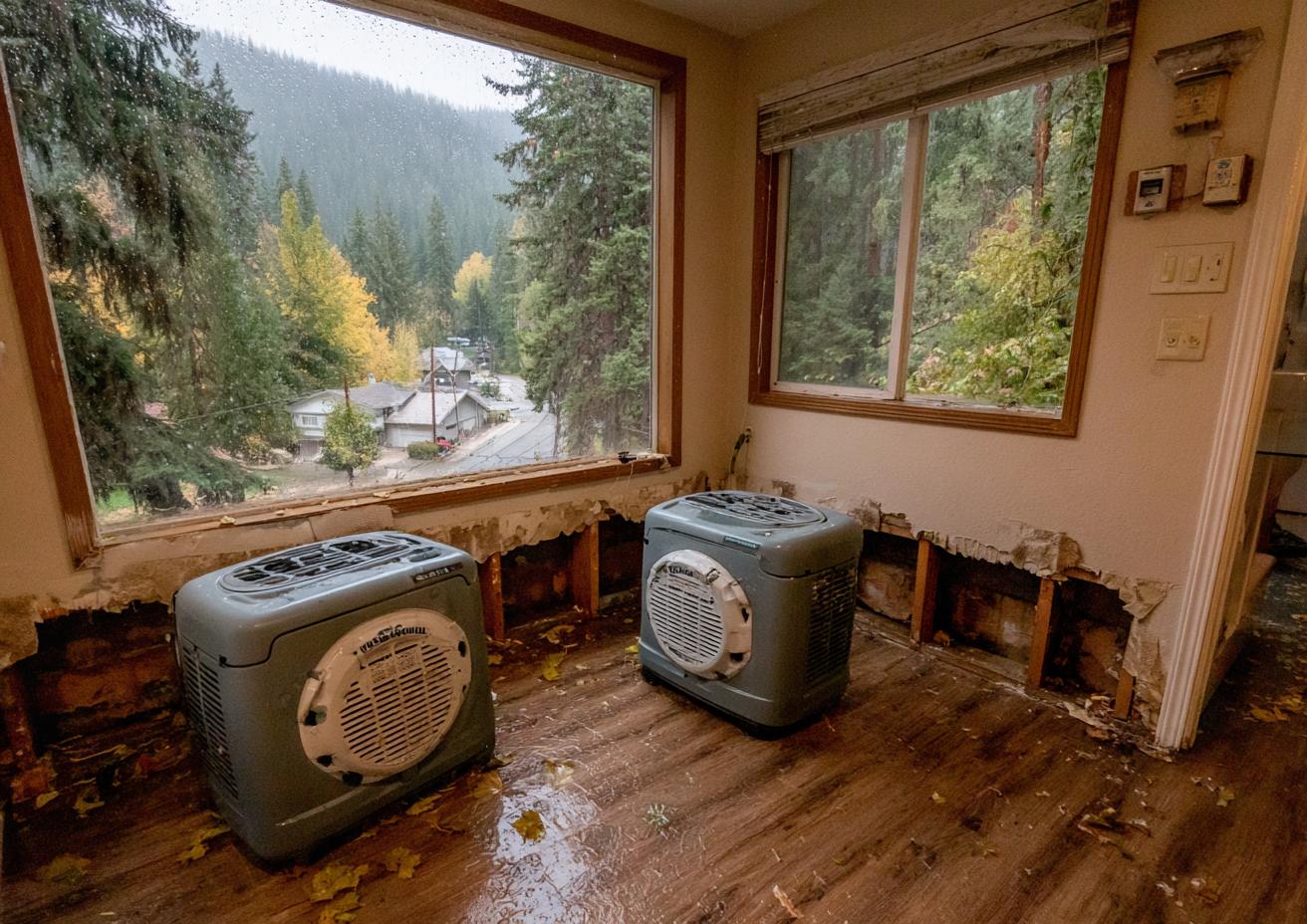
- Find the extent. Moisture readings across the wall, below and beside the window, and on the floor.
- Open where needed. Drywall below the window may be cut so the cavity can dry; wet insulation comes out.
- Dry the cavity. Air movers and dehumidifiers, with readings on the framing and sheathing.
- Repair the interior once the wall reads dry: drywall, trim, sill and paint.
The interior side of this work is restoration. Fixing the exterior opening so the next storm doesn't do the same thing is a separate job, and worth doing before the wall is closed back up.
Decks and Doors
Where a deck attaches to a house, water collects in the joint between the deck boards and the wall. If the flashing there has failed, that water runs into the wall and the rim joist below. Inside, it shows up as a stain on the ceiling of the room under the deck door, or as damp carpet just inside a slider. Doors that face the weather take a beating too: rain driven against the bottom of a door works under the threshold. These leaks look like plumbing at first. Their timing gives them away: they appear in storms, not at random.
Before Storm Season
- look at the caulk and trim around exterior windows for gaps or cracks
- check sills for soft or dark wood
- make sure gutters and downspouts aren't overflowing onto walls
- look at where decks meet the house
Questions
Why does my window leak only in some storms?
Wind direction. Rain driven straight at that wall finds the gap; rain from other directions doesn't reach it.
Is it the window or the wall?
Often the joint between them: the frame, the flashing behind the trim, or the sill. Readings show how far the water has spread inside.
Can a wet wall dry without being opened?
A small amount caught early, sometimes. Wet insulation inside the wall usually means it has to be opened.
Does insurance cover rain through a window?
It depends on the cause and the policy. Damage from a sudden opening is treated differently from a long-term gap.
Where This Is Common
Exposed and hillside homes see the most of it: Lea Hill, West Hill, Black Diamond, Lake Tapps and Milton. For stains overhead, see ceiling water damage repair.

Washer, Dishwasher and Fridge Lines: Leaks That Spread Under the Floor
The appliance connections that fail, and where the water goes.
What Water Damage Restoration Costs Depend On
The factors behind the bill, without prices.