What Water Damage Restoration Companies in Auburn Do
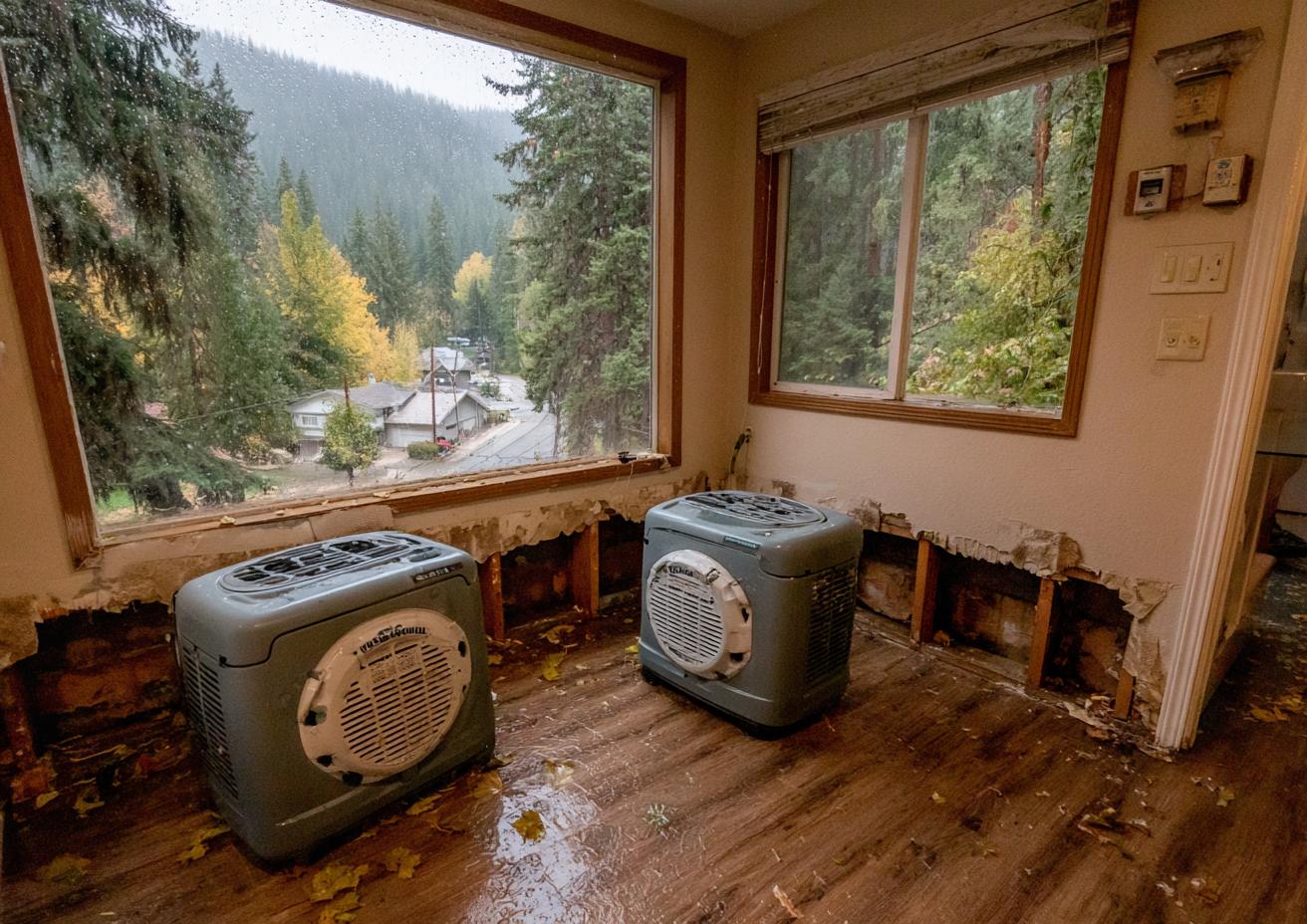
Water damage restoration companies do two jobs in order. First comes mitigation: stopping the source, getting the water out and drying the structure, so the damage stops spreading. Then comes restoration: replacing what had to be removed and putting the room back. In Auburn that might mean a crawlspace under an older valley-floor house, a daylight basement on West Hill, or a ceiling under an upstairs bathroom on Lea Hill. The process is the same. The materials and the drying plan change with the house.
Mitigation, Remediation, Restoration: Which Is Which
| Term | What it covers | When it happens |
|---|---|---|
| Water mitigation | Stopping the source, extraction, protecting dry areas, setting up drying | First, as soon as the job starts |
| Water remediation | Removing and cleaning materials the water ruined: pad, drywall, insulation, vapor barrier | During mitigation, once the readings show what's wet |
| Structural drying | Air movers and dehumidifiers on a plan, with daily readings | Over the days after extraction |
| Restoration and repair | Drywall, trim, flooring, cabinets and paint going back | After the readings say dry |
Different companies use these words differently. Ask the one you hire what each line of its paperwork means.
The Job in Five Blocks
- Stop and protect. The source is shut off, wet areas are checked for electrical risk, furniture is moved or blocked up, and everything is photographed as found.
- Extract. Standing water comes out with pumps and extractors. Soaked carpet pad is usually pulled.
- Set drying. Air movers go where the readings say, and dehumidifiers pull the moisture out of the air. In a crawlspace, that can mean drying under the house from the access hatch.
- Check readings. Moisture readings on framing, subfloor and drywall at each visit, compared with a dry room in the same house.
- Rebuild. New drywall, texture, paint, trim and flooring once the numbers match.
Materials That Usually Stay, and Ones That Usually Come Out
- Framing and subfloor: usually dried in place.
- Drywall: often dried in place after a short clean-water leak. Wicked-up or long-wet drywall is cut out low on the wall.
- Carpet: sometimes dried in place after clean water. The pad under it usually comes out.
- Hardwood: often dried in place with mats and readings, though some boards may cup.
- Laminate: usually comes out. The core swells and doesn't go back.
- Insulation: wet batts in walls, attics and crawlspaces almost always come out.
- Anything flood water reached: carpet, pad, insulation and the bottom of drywall come out.
What Does a Water Mitigation Company Do First?
It stops the damage from getting worse. That means confirming the water is off, making the area electrically safe, photographing the damage, and taking moisture readings to find out how far the water went. Then it extracts standing water and starts drying. Repairs come later. A water mitigation company that starts by talking about new flooring has the order backwards.
Is Water Remediation the Same as Restoration?
Not quite. Remediation means removing and cleaning out what the water damaged so the structure can dry. Restoration means rebuilding afterward. On most Auburn jobs, the same company does both, and the bill shows them as separate stages.
How the House Changes the Plan
- Crawlspace homes on the valley floor: drying under the house, replacing the vapor barrier, sometimes pulling the insulation in the floor joists.
- Split-levels on the plateaus: the lower level takes the water. Carpet and the bottom of the drywall are usually the first decisions.
- Two-story homes: upstairs leaks mean drying two floors at once, the subfloor above and the ceiling below.
- Apartments and condos: units above and below may be wet too, and the building's insurer is often involved.
Living in the House While It Dries
Usually possible after a clean-water leak, as long as the power is safe in the wet rooms. The equipment is loud and runs constantly, and dehumidifiers warm the room. Pets and small children should stay out of rooms with open walls. After flood water, plan on staying out of the affected rooms until the cleanup is done.
Cost and Insurance
Every job is priced by the company that does it, after it sees the damage. What moves the number is covered in what water damage restoration costs depend on. If river or surface water is involved, read flood insurance near Auburn's levees before you file.
The Paperwork You Should End Up With
By the end of a restoration job, you should have:
- photos of the damage as found, and of what was removed
- a written scope listing the rooms, materials removed and the drying plan
- moisture readings from the first visit to the last, with dates
- an equipment log showing what ran, where, and for how long
- a final reading showing the structure dry before the walls closed
These records matter for an insurance claim, and later, if you sell the house and a buyer asks about past water damage.
Restoration Around Auburn
Auburn
- Downtown AuburnAuburn
- North AuburnAuburn
- Lea HillAuburn
- Lakeland HillsAuburn
- West HillAuburn
- Terminal ParkAuburn
- KerseyAuburn
Green
White
West
Main page: water damage restoration in Auburn.