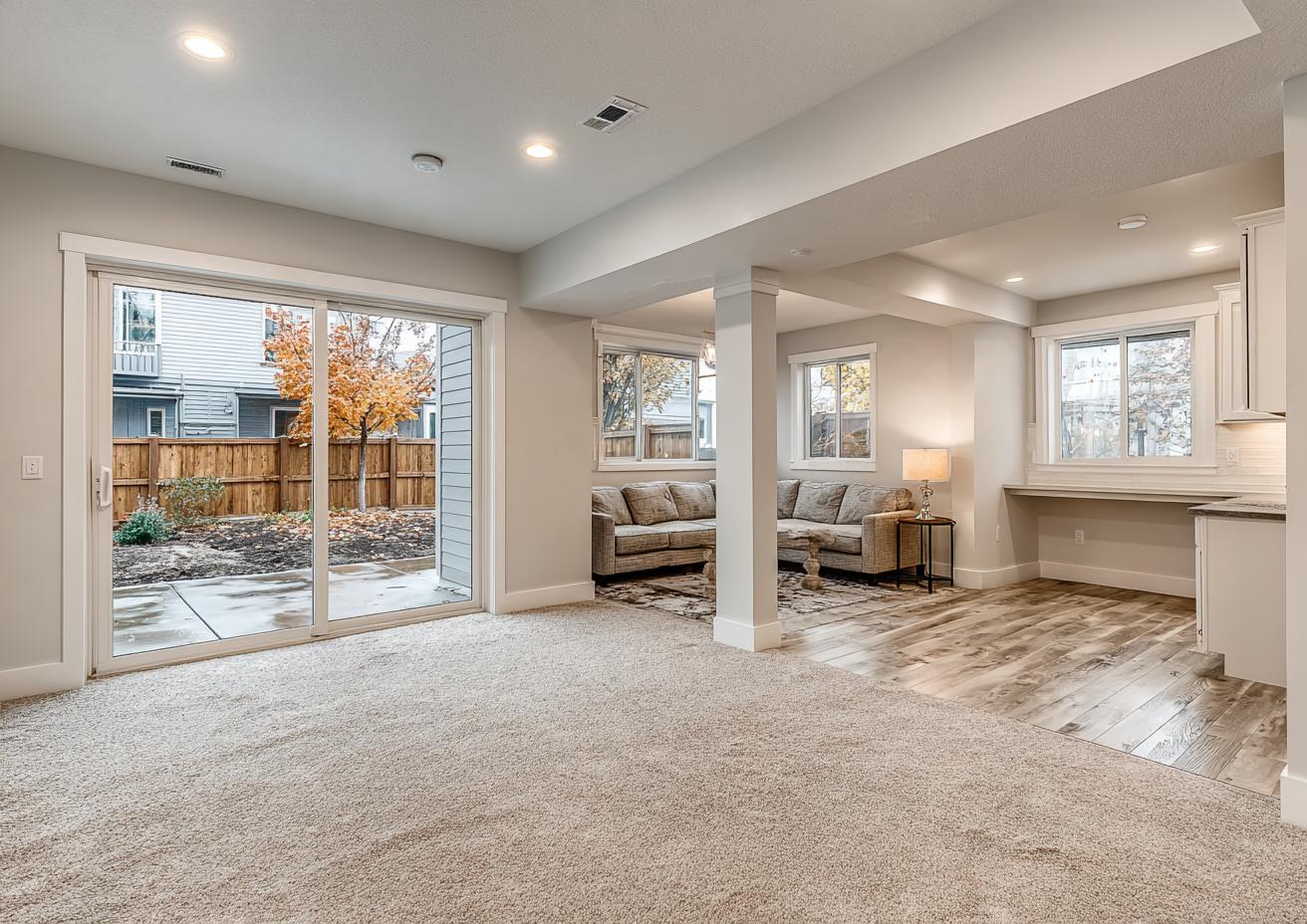
A daylight basement is a lower floor built into a slope: below ground on the uphill side, open to the yard at grade on the downhill side. They're everywhere on Auburn's hills, in the split-levels and hillside ramblers on West Hill and Lea Hill, and in homes on sloped lots in Bonney Lake, Milton and Edgewood. They make good family rooms and bedrooms. They're also where a hillside house takes on water.
Why the Lower Level Gets Wet
Rain that soaks into a hillside doesn't stay put. It moves downhill through the soil until it meets something, often the uphill wall of your lower floor. In a long Puget Sound rain, that wall has water pressing on it for days. It finds the weakest point, usually the joint where the wall meets the floor slab, a crack, or a pipe penetration.
The downhill side has its own risks. A slider or door at grade, a window well that fills, or a patio that slopes toward the house can let surface water straight in during a heavy storm.
Where the Water Comes In
| Where | What it looks like | Usual cause |
|---|---|---|
| Along the uphill wall at the floor | Carpet wet in a strip along one wall | Groundwater after long rain |
| A corner | A spreading damp patch | Downspout or gutter dumping near the corner |
| Under a window well | Water on the sill and wall below | A well that filled with rain or debris |
| At a door or slider | Water on the floor just inside | Surface water from a patio or yard |
| In the middle of the floor | A wet spot away from walls | A supply line or drain under the slab, or a fixture |
| Near the water heater or washer | Water spreading from the utility area | An appliance or its connection |
What Gets Damaged
Most daylight basements are finished: carpet and pad over concrete, drywall over insulated framing, baseboards, maybe a bathroom. Water on that floor:
- soaks into carpet pad, which holds it against the slab
- wicks up the bottom of the drywall, often well above the waterline
- wets the insulation and bottom plate inside the walls
- swells laminate and the bottom of particleboard furniture and cabinets
Concrete holds moisture for a long time. A carpet can look dry while the slab under it still reads wet.
What Drying Involves
- Stop and assess. Find where the water came in. Readings along every wall show how far it went.
- Extract. Water out of the carpet; the pad usually comes out.
- Open what's wet. The bottom of drywall is often cut along the wet walls so the cavity can dry, and wet insulation comes out.
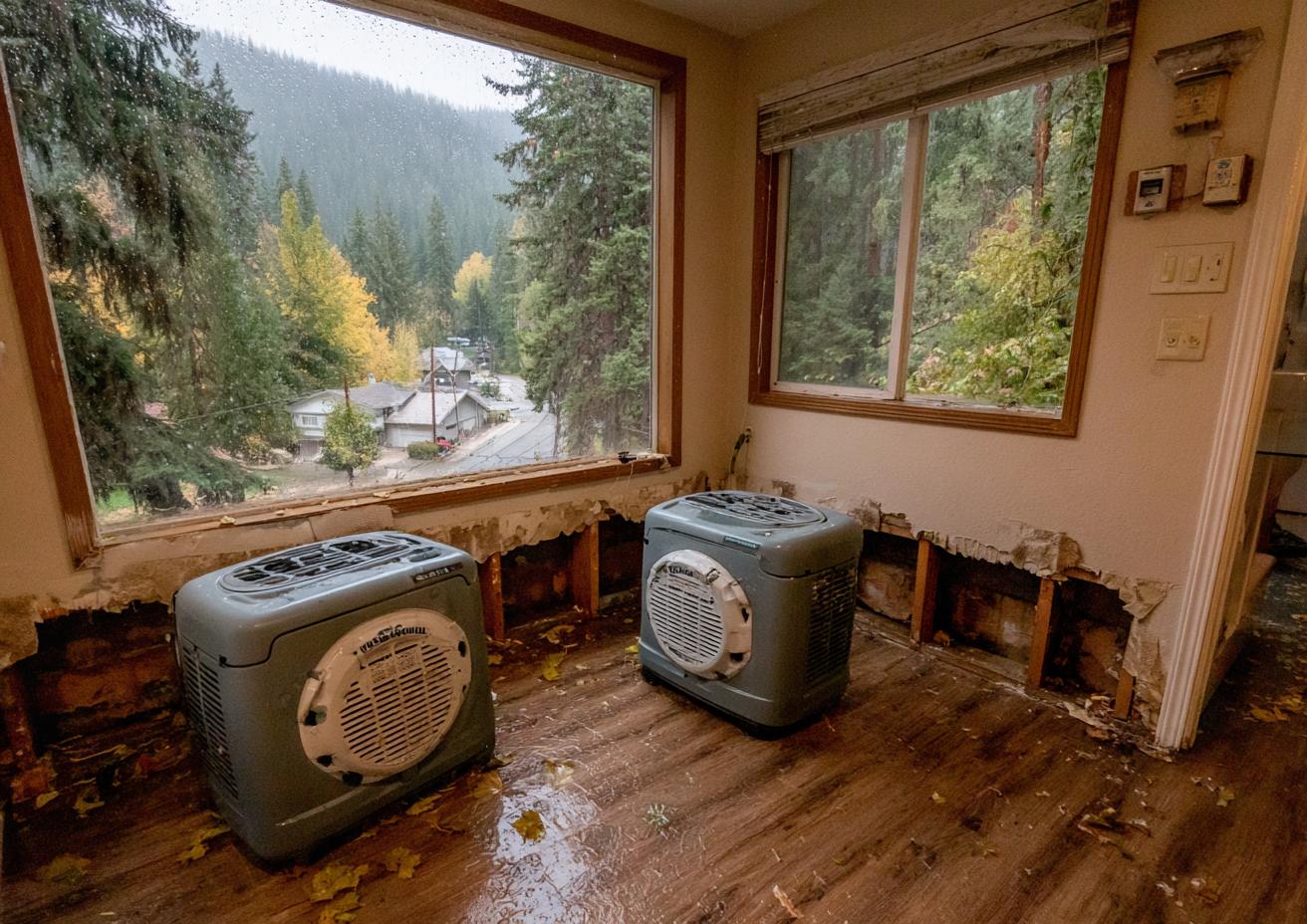
- Dry. Air movers and dehumidifiers, with readings on the slab, the framing and the drywall.
- Rebuild once the readings match dry areas.
The full process is on basements and crawlspaces.
After the Drying
The restoration company dries the damage. Keeping the next rain out of the lower level is a separate question, about grading, gutters, downspouts and drainage, and it's worth thinking about once the room is dry:
- Do the downspouts discharge well away from the house?
- Does the ground slope away from the uphill wall?
- Are window wells covered or clear?
- Does a patio or walkway pitch toward a door?
None of these are emergency work, and none should be attempted while the room is still wet.
The Hills Compared With the Valley
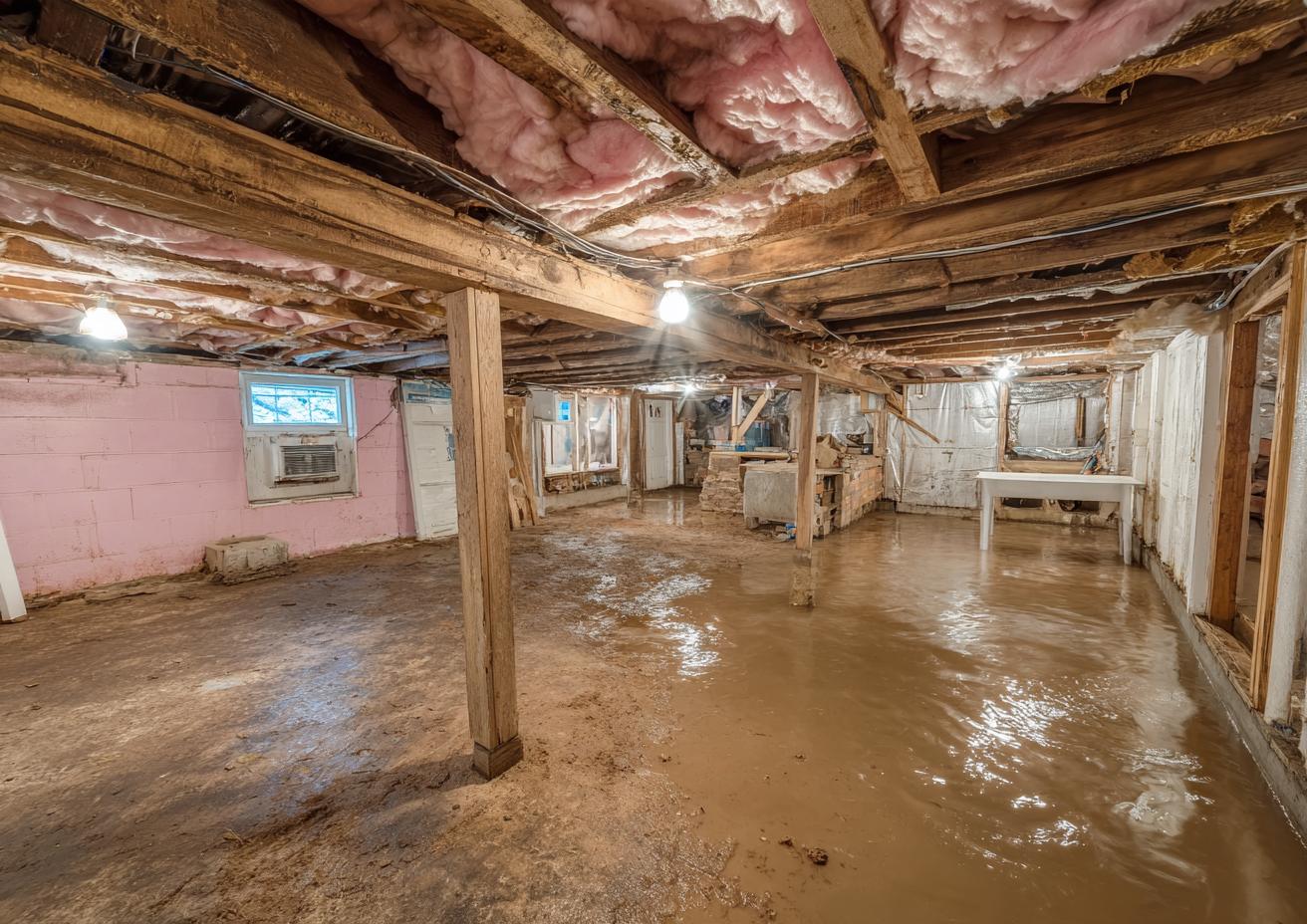
Daylight basements are a hill problem. Down on the valley floor, more older homes sit over crawlspaces instead, and the water collects under the house. If you're on the valley floor, see crawlspace water on the valley floor.
Questions
Why does my lower-level carpet get wet only after long rain?
That pattern points to groundwater moving downhill and pressing on the uphill wall. A single heavy storm is more likely to bring surface water at a door or window well.
Can a finished basement be dried without tearing everything out?
Sometimes. After a small clean-water leak caught early, carpet and drywall can be dried in place. After groundwater or a long-wet floor, the pad and the bottom of the drywall usually come out.
Does homeowners insurance cover groundwater in a basement?
Often not. A sudden plumbing leak is a different story. See what water damage restoration costs depend on for what drives the bill either way.
Is a wet lower level an emergency?
Standing water near outlets or the panel is. Even without that, water in a finished room keeps spreading into the walls, so it's worth calling now.
On the Hills
This is a common call on West Hill, Lea Hill, Bonney Lake and Edgewood.
Crawlspace Water on the Valley Floor
What's going on under older houses near the rivers.
What Water Damage Restoration Costs Depend On
The factors behind the bill, without prices.